
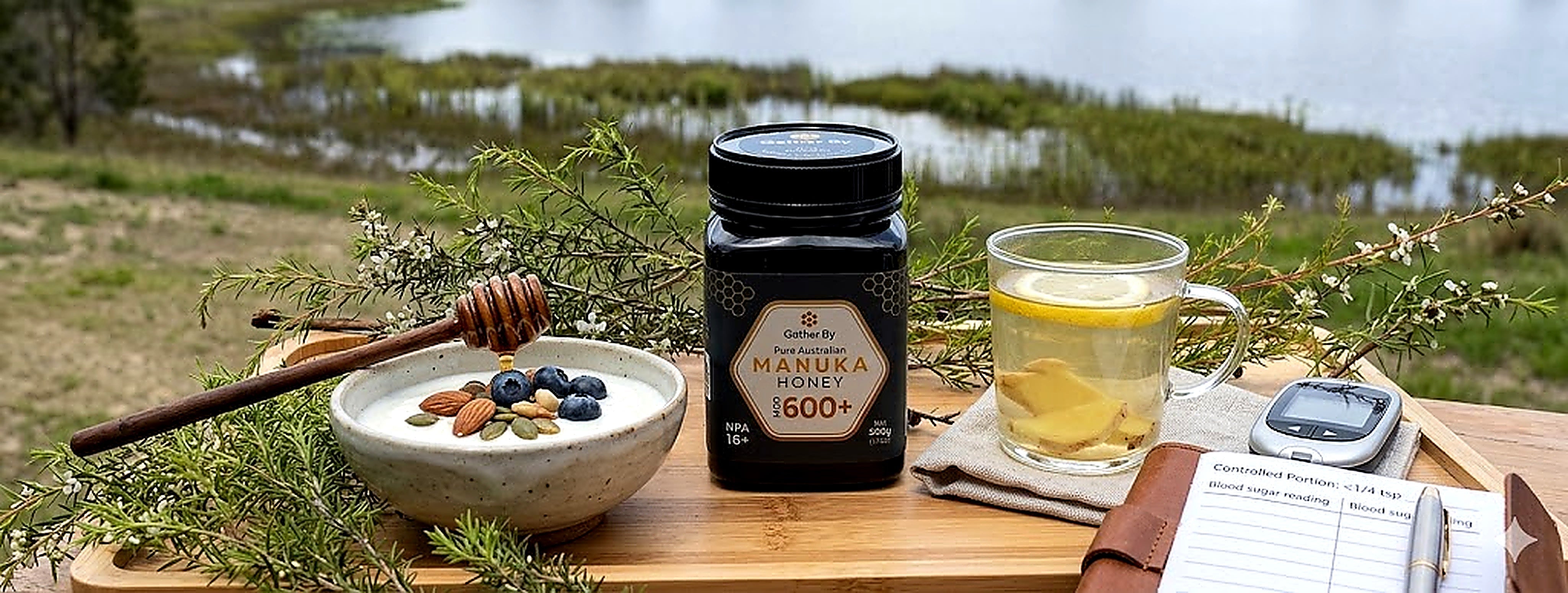
Manuka Honey and Diabetes: Understanding Its Place in a Controlled Diet
Living with diabetes requires careful choices, balance, and a clear understanding of how food affects the body. Sweetness, in particular, is something many people approach cautiously. In recent years, there has been growing interest in Manuka honey and diabetes, especially among those seeking natural flavours that may fit, in very small amounts, within a structured and professionally guided eating plan.
Some people also explore raw Manuka honey and Manuka honey benefits because it is a natural whole food with a distinctive flavour and trace bioactive compounds.
It is important to be clear from the outset. Manuka honey is still a sugar and is not a treatment for diabetes. However, when used mindfully, sparingly, and with medical guidance, some individuals choose to include small amounts as part of a controlled diet.
This article explores how Manuka honey differs from refined sweeteners, why its flavour and composition matter, and how Gather By’s Australian Manuka honey may be used responsibly by those managing blood sugar levels.
For readers who want a deeper look at the research and considerations around this topic, explore our detailed guide on Manuka honey and diabetes:
https://www.gatherbymanuka.com/blogs/manuka-honey-blog/manuka-honey-and-diabetes
Understanding Blood Sugar and Sweetness
People managing diabetes are often advised to limit or avoid added sugars. Refined sweeteners such as white sugar and syrups can cause rapid spikes in blood glucose and offer little nutritional value.
Manuka honey differs in that it is a whole food, containing a natural mix of fructose and glucose alongside trace minerals, enzymes, and plant-derived compounds. This does not mean it lowers blood sugar, but it does mean its flavour profile is richer and more complex. For some people, this allows a much smaller quantity to provide satisfaction.
This distinction is important. The conversation around Manuka honey and diabetes is not about replacing sugar freely, but about whether a micro-amount of a natural product can be used intentionally instead of larger quantities of refined sweeteners.
Individual responses vary greatly. This is why blood glucose monitoring and professional advice are essential before introducing honey in any form.
Why Manuka Honey Is Different From Regular Honey
Manuka honey comes from the nectar of native Australian Leptospermum plants. During the natural maturation process, a compound called DHA converts into MGO (methylglyoxal). This gives Manuka honey its distinctive strength and bioactive profile.
Regular honey does not contain consistent or measurable levels of MGO. While it can still be nourishing, it lacks the predictable potency and depth that defines Manuka honey.
From a dietary perspective, Manuka honey’s advantage is not that it is sugar-free, but that it delivers greater flavour intensity in a smaller amount. This can help reduce overall sweetness intake when used carefully.
Choosing the Right MGO Level for Dietary Use
When Manuka honey is used as food rather than for targeted wellness or topical applications, lower to mid-range MGO levels are more appropriate.
From the Gather By range, individuals who have professional approval may consider:
MGO100+
If you prefer a lighter option, Manuka Honey MGO100+ is a gentle choice that works well in warm drinks or light food use where only a small trace amount is needed.
MGO300+
For those who enjoy a fuller taste, Manuka Honey MGO300+ offers a richer and deeper flavour, allowing you to use even smaller portions while still maintaining satisfaction.
MGO600+
Some people occasionally choose Manuka Honey MGO600+ when they prefer a more robust and intense taste and are comfortable using it with strict moderation.
Higher strengths such as MGO900+, MGO1200+, MGO2000+, and MGO2200+ are designed for restorative or therapeutic use and are not necessary for controlled dietary purposes.
Every jar of Gather By Manuka honey is independently tested, so the MGO level on the label is accurate and transparent.
Portion Control: The Most Important Factor
Those searching for how to use Manuka honey for diabetes are usually seeking clarity around portion size, not permission to consume freely.
When approved by a healthcare professional, Manuka honey is typically used in very small amounts, often less than a quarter teaspoon, and not every day. The aim is flavour enhancement, not sweetness.
Common ways people use it include:
-
Stirring a small amount into herbal tea
-
Adding a trace to Greek yoghurt
-
Using a light touch in salad dressings
-
Incorporating it into a recipe where the amount is shared across servings
The focus is always on quality over quantity.
Using Manuka Honey With Food
Some individuals prefer to use Manuka honey with meals rather than on its own. Pairing honey with foods that contain fibre, protein, or healthy fats may help slow digestion and support a more balanced eating experience.
Common pairings include:
-
Plain yoghurt or cottage cheese
-
Berries in small portions
-
Herbal teas
-
Nuts, seeds, or olive oil-based foods
Traditional food practices have long combined honey with other ingredients as part of balanced meals. While this does not remove sugar content, it may feel gentler for some people when used in moderation and with guidance.
Simple Recipe Ideas Using Micro-Portions
For those searching for a Manuka honey recipe for diabetes, simplicity and restraint are key.
Warm Lemon and Ginger Cup
Warm water, fresh ginger, a squeeze of lemon, and a very small amount of Manuka honey for balance.
Yoghurt and Berry Bowl
Plain Greek yoghurt, a few berries, and a light touch of MGO300+ Manuka honey.
Simple Dressing
Extra virgin olive oil, apple cider vinegar, mustard, and a trace of Manuka honey to soften acidity.
These examples are intended only for individuals who have medical approval to include honey in their diet.
Choosing Gather By Manuka Honey
For those who choose to use Manuka honey occasionally, Gather By offers clarity, quality, and transparency.
Our Manuka honey is:
-
100 percent Australian
-
Raw and unpasteurised
-
Single-origin
-
Independently verified for MGO content
Suggested options for dietary use include MGO100+, MGO300+, and MGO600+, depending on flavour preference and portion control.
Explore the full range here:
https://www.gatherbymanuka.com/collections/buy-raw-manuka-honey
Frequently Asked Questions
Is Manuka honey safe for people with diabetes?
Honey is a sugar and must be used cautiously. Some individuals include very small amounts with medical guidance.
Does Manuka honey lower blood sugar?
No. It does not reduce blood glucose levels.
Is Manuka honey better than regular sugar?
It offers richer flavour and natural compounds, which may allow smaller amounts to be used. It is still a sugar.
Which MGO level is best for food use?
MGO100+ and MGO300+ are generally most appropriate. Higher levels are not required for dietary use.
Can Manuka honey be used every day?
Daily use is not usually recommended in controlled diets. Frequency should be determined individually.
A Balanced Perspective
Manuka honey is not a solution for diabetes, but for some people it can be a mindful, occasional ingredient within a structured and supervised lifestyle.
At Gather By, our role is to provide honest information and genuine Australian Manuka honey, so people can make informed decisions with confidence and care. Contact us today if you’d like to learn more or need help choosing the right option.
Prepared by
The Gather By Team



Dejar un comentario
Este sitio está protegido por hCaptcha y se aplican la Política de privacidad de hCaptcha y los Términos del servicio.