
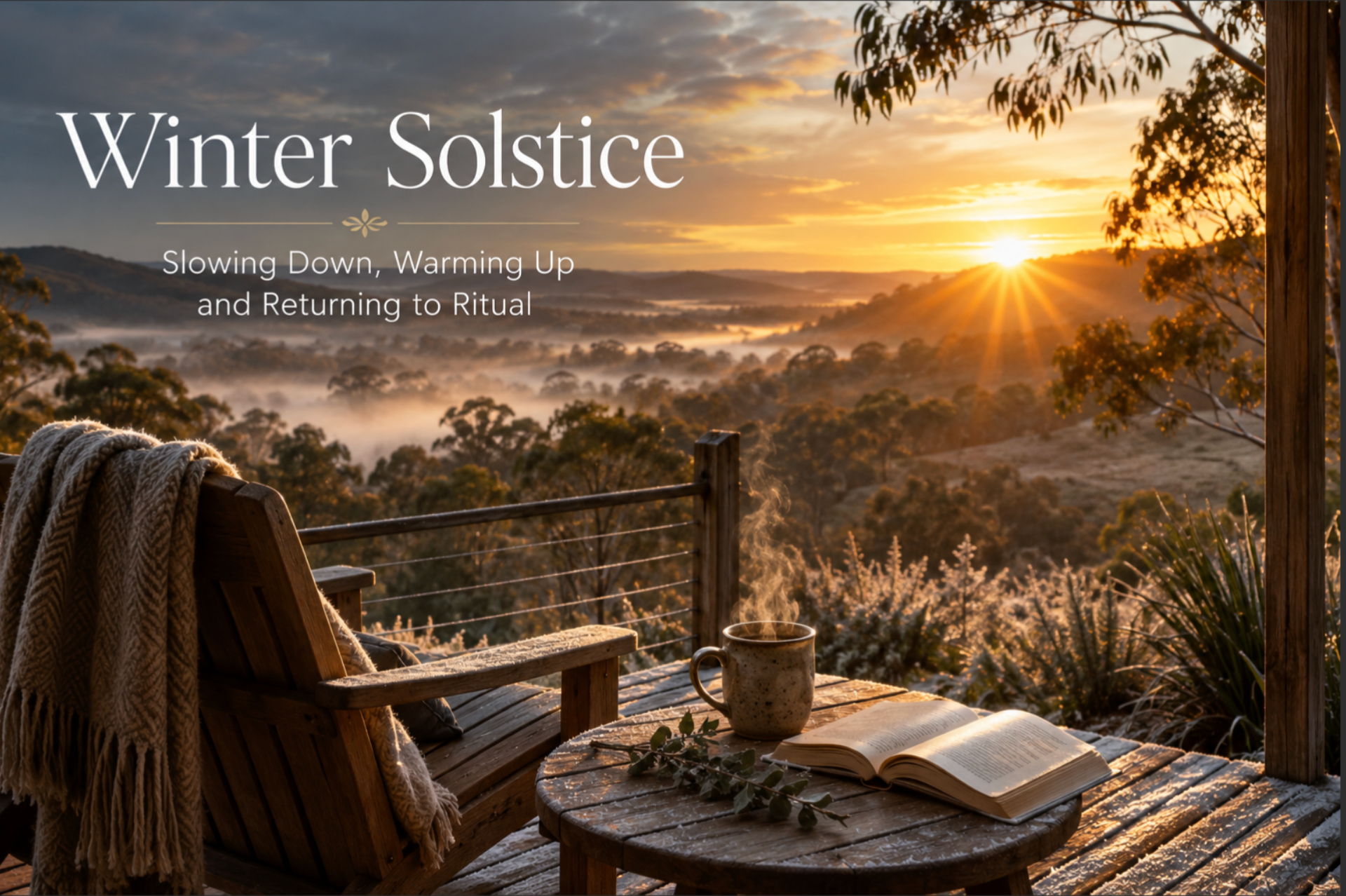
Winter Solstice: Slowing Down, Warming Up and Returning to Ritual
A Reflection on the Shortest Day of the Year
As the winter solstice arrives, perhaps nature is offering us an important reminder: growth is not always about moving faster. Sometimes it begins by slowing down.
Each year, around 21 June, we experience the Winter Solstice — the shortest day and longest night of the year in the Southern Hemisphere.
For thousands of years, people across cultures have marked this moment in the seasonal calendar.
Long before smartphones, calendars and electric lighting, our ancestors understood something many of us have forgotten.
Life moves in cycles.
There are seasons for growth.
Seasons for harvest.
Seasons for activity.
And seasons for rest.
The Winter Solstice reminds us that even in nature's quietest moments, renewal is already underway.
Because while this may be the shortest day of the year, it also marks the gradual return of the light.
Australia Has Many Winters
Winter means different things depending on where you live.
In Tasmania, winter may bring frost, snow and icy mornings.
In the Australian Alps, ski fields come alive.
Across inland Australia, clear skies can produce freezing nights and bright sunny days.
Here in the Northern Rivers, winter often delivers crisp mornings, gentle sunshine and some of the most pleasant days of the year.
Further north in tropical Australia, the season may simply feel cooler and drier.
Yet despite these differences, winter changes our rhythm.
We spend more time indoors.
We seek warmth.
We gather with family and friends.
And instinctively, many of us begin to slow down.
Nature Knows When to Rest
One of the most remarkable lessons nature teaches us is that growth is not constant.
Trees do not flower all year.
Plants do not produce fruit in every season.
Many animals conserve energy during the colder months.
Even the landscape itself appears to pause.
Yet beneath the surface, important work continues.
Roots strengthen.
Soils regenerate.
Energy is stored.
Preparation begins for the seasons ahead.
Nature understands something modern life often forgets:
Rest is productive.
Recovery is valuable.
Periods of stillness are often essential for future growth.
The Lost Art of Seasonal Living
For much of human history, people lived closely connected to the seasons.
Food availability changed throughout the year.
Work patterns shifted.
Communities adapted their routines according to daylight, weather and harvest cycles.
Today, modern technology allows us to operate at the same pace year-round.
The lights stay on.
Emails continue arriving.
The calendar rarely slows.
Yet our bodies still respond to seasonal cues.
Many people find themselves sleeping slightly longer during winter.
Craving warmer foods.
Spending more time at home.
Seeking comfort, reflection and connection.
Rather than resisting these signals, perhaps there is value in listening to them.
Seasonal living isn't about doing less.
It's about doing what the season asks of us.
Why Ritual Matters
One of the themes we've explored throughout this winter series is the importance of daily rituals.
Not because rituals are fashionable.
But because they help us create moments of consistency, meaning and connection.
A morning walk.
A warm cup of tea.
Reading before bed.
Sharing a meal with family.
Taking a moment to reflect.
These small acts may seem insignificant in isolation.
Yet over time, they become the habits that shape our wellbeing.
Rituals provide comfort during busy periods and stability during uncertain times.
Perhaps that's why they have existed in every culture throughout human history.
Food, Warmth and Connection
Winter has always been a season associated with gathering.
Gathering around a table.
Gathering around a fire.
Gathering with family and friends.
Some of life's most meaningful conversations happen over a shared meal.
Food nourishes more than the body.
It creates connection.
Community.
Belonging.
Years ago, while living in New York City, I would collect food each week from a farmer named Abner Lapp.
Late at night, I'd walk across Manhattan to collect raw dairy, biodynamic chicken, fresh produce and foods carefully produced by people who genuinely cared about the land.
Over time, a simple customer relationship became a friendship.
Abner would call me from the single telephone in the farm's milk shed and I'd always take the call.
What I came to realise was that food is about much more than nutrition.
It is about trust.
Relationships.
Community.
And understanding where our food comes from.
Perhaps that too is part of wellness.
The Return of the Light
While the Winter Solstice marks the longest night of the year, it also signals something hopeful.
From this point forward, daylight gradually begins to increase.
The change is almost imperceptible at first.
A few seconds.
Then a few minutes.
Until eventually spring returns.
There is a powerful lesson in that.
Meaningful change often happens gradually.
The habits that improve our wellbeing rarely transform our lives overnight.
They work quietly in the background.
One walk.
One healthy meal.
One conversation.
One act of kindness.
One daily ritual at a time.
Much like the returning light, their impact grows over time.
What Gather By Believes
At Gather By, we believe nature has much to teach us.
Healthy ecosystems thrive because they work in cycles.
Periods of growth are balanced by periods of recovery.
Pollinators depend on seasonal flowering.
Landscapes regenerate through time and patience.
Perhaps we are not so different.
Winter offers an opportunity to slow down, reflect and reconnect with the people, places and habits that matter most.
Not as a retreat from life.
But as preparation for what comes next.
Final Thoughts
The Winter Solstice reminds us that every season has its purpose.
While modern life often celebrates constant activity, nature tells a different story.
Growth requires rest.
Progress requires reflection.
And renewal often begins in the quietest moments.
As the days gradually begin to lengthen once again, perhaps this is an opportunity to embrace a slower pace, appreciate simple rituals and reconnect with the things that nourish us most.
Because even on the shortest day of the year, the light is already returning.
Frequently Asked Questions
What is the Winter Solstice?
The Winter Solstice is the shortest day and longest night of the year. In Australia it occurs around 21 June each year.
Why is the Winter Solstice significant?
For thousands of years cultures around the world have marked the solstice as a seasonal turning point that symbolises reflection, renewal and the gradual return of longer days.
Why do people feel different during winter?
Changes in daylight, temperature and seasonal rhythms can influence sleep patterns, energy levels, mood and daily routines.
What is seasonal living?
Seasonal living involves adapting habits, food choices and routines to align more closely with the natural rhythms of the seasons.
Why are rituals important for wellbeing?
Rituals create consistency, connection and meaning, helping support healthy habits and emotional wellbeing over time.
How can I create a winter wellness ritual?
Simple rituals such as walking, reading, preparing nourishing meals, enjoying a warm drink or taking time for reflection can help create moments of calm and balance during winter. Many people also explore natural wellness topics, including Manuka honey benefits, as part of creating healthy seasonal habits.
A Final Note from Gather By
At Gather By, we believe some of life's most valuable lessons can be found in nature.
The Winter Solstice reminds us that periods of rest are not wasted time.
They are often the foundation for future growth.
As winter settles in, we encourage you to embrace the season, reconnect with simple rituals and take a moment to appreciate the returning light.
Because wellness is not built in a day.
It is built through the choices we make, season after season.
Have questions about Australian Manuka honey or our products? Contact us to learn more.
Written by Matt Blomfield
Founder, Gather By Australian Manuka Honey

Hinterlasse einen Kommentar
Diese Website ist durch hCaptcha geschützt und es gelten die allgemeinen Geschäftsbedingungen und Datenschutzbestimmungen von hCaptcha.