
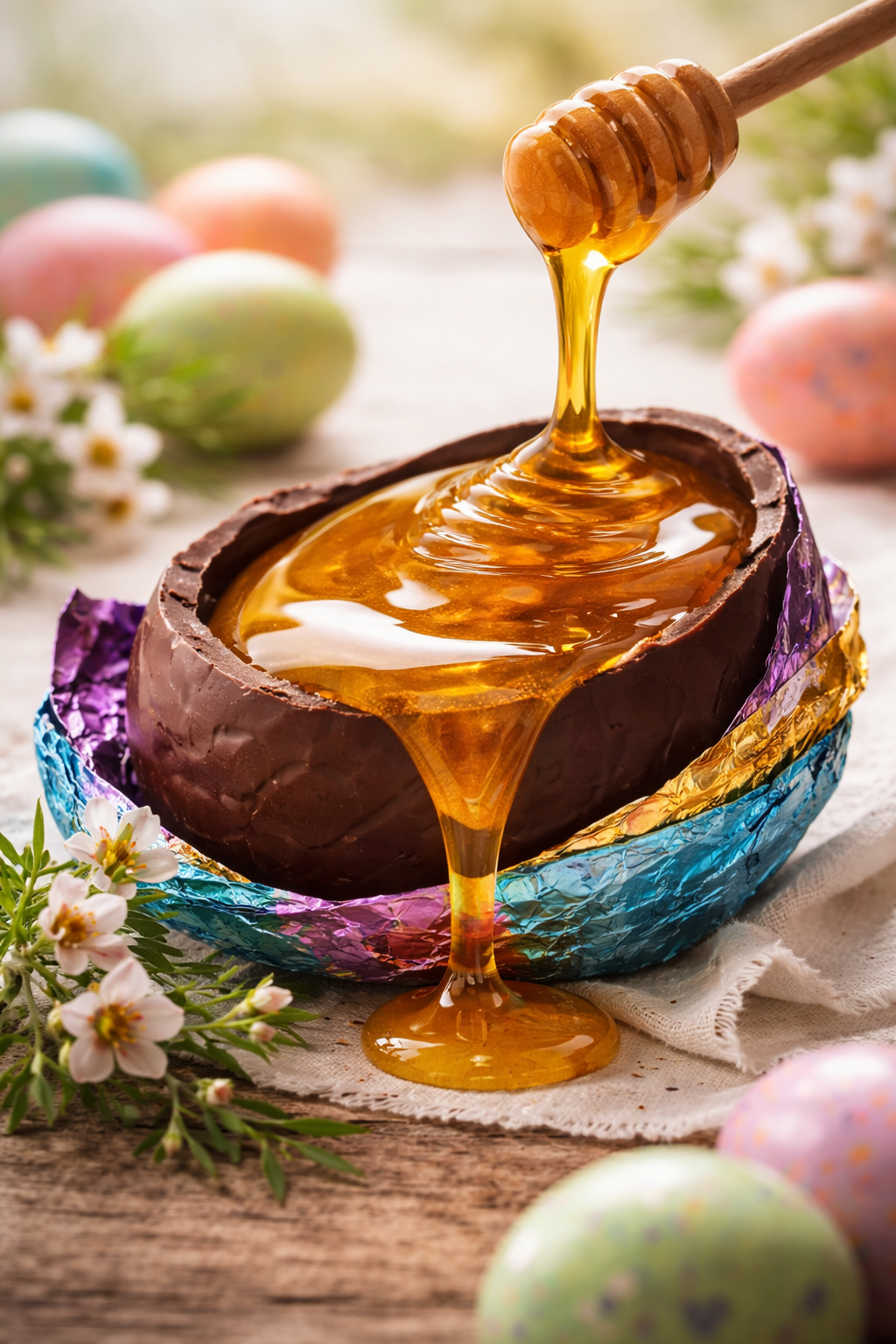
Can People With Diabetes Enjoy Easter? A Practical Guide to Manuka Honey and Blood Sugar
Easter is traditionally a time of celebration — family, connection, and yes… chocolate.
But for people managing blood sugar, it can feel like navigating a minefield of sweets, hidden sugars and constant temptation.
The good news is that not all sweet options behave the same way in the body.
While refined sugar and processed confectionery can cause rapid spikes in blood glucose, more natural alternatives — when used carefully — may offer a different experience.
This is where raw Manuka honey enters the conversation.
With its unique bioactive properties and slower glycaemic response, Manuka honey is often considered one of the best honeys for health when used in moderation as part of a balanced diet.
Why Does Glycaemic Index Matter at Easter?
The glycaemic index (GI) measures how quickly a food raises blood sugar levels.
Highly processed sweets — the kind most common at Easter — tend to have a high GI, meaning they are rapidly absorbed and can lead to sharp spikes followed by energy crashes.
Manuka honey behaves differently.
Unlike refined sugar, raw Australian Manuka honey has a lower glycaemic index, meaning blood sugar rises more gradually after consumption — an important consideration for people managing diabetes.
This difference comes down to its natural composition and how the body processes it.
Standard Honey vs Manuka Honey
|
Feature |
Standard Honey |
Manuka Honey |
|
Source |
Mixed floral nectars |
Leptospermum (Manuka) |
|
Glycaemic response |
Moderate–high |
Lower, more gradual |
|
Bioactive compounds |
Low |
High (MGO present) |
|
Role |
Sweetener |
Functional food |
At Easter, these differences matter.
Choosing lower GI options — and controlling portion size — can help reduce the impact of seasonal indulgences.
What Makes Manuka Honey Different?
Manuka honey is not just another sweetener.
It contains a naturally occurring compound called MGO (methylglyoxal), which is responsible for its unique bioactivity.
Manuka honey's naturally occurring MGO is what distinguishes it from standard honey — and higher MGO ratings like MGO 300+, MGO 600+, or MGO 1200+ reflect stronger antibacterial bioactivity, not just sweetness.
This is an important distinction.
The MGO rating is not about how sweet the honey is — it reflects its functional strength.
When choosing Manuka honey:
Look for certified MGO levels on the label — medical grade Manuka honey typically starts at MGO 600+, while the strongest Manuka honey can reach MGO 2200+.
At Gather By, we see these as:
-
MGO100–300+ → Everyday wellness
-
MGO600–1200+ → Targeted support
-
MGO2000+ → Ultra-premium, rare batches
Portion Control: The ½ Teaspoon Rule
For people managing blood sugar, quantity matters more than anything else.
A practical approach — especially over Easter — is:
👉 ½ teaspoon per day (approx. 5g)
This allows you to enjoy the benefits of Manuka honey while keeping sugar intake controlled.
Rather than eliminating sweetness altogether, this approach is about being intentional.
Manuka honey also comes in different formats, making this easier:
Pure Manuka honey with high MGO is available in a range of formats — from traditional jars to convenient Manuka honey gummies — making it easier to enjoy your daily half-teaspoon without fuss.
This is particularly helpful during Easter, where gummies can act as a more functional alternative to conventional sweets.
Raw Australian Manuka Honey — What to Look For
Not all Manuka honey is created equal.
Quality, origin and processing all influence whether the honey delivers real benefits — or simply acts as another sugar source.
Unlike regular honey, raw Australian Manuka honey has a lower glycaemic index, helping support a more gradual blood sugar response.
When choosing a product, look for:
-
Certified MGO rating
-
Independent testing
-
Traceability to origin
-
Raw, minimally processed honey
Australians looking to buy Manuka honey online can source high-quality, authentic Australian Manuka honey directly from trusted producers — avoiding heavily processed, low-bioactivity versions often found on supermarket shelves.
At Gather By, our honey is:
-
raw, pure, 100% Australian Manuka Honey
-
sourced from wild stands and Medicinal Honey Forests™
-
independently tested for MGO
-
traceable back to origin
This ensures what you’re consuming reflects true bioactivity — not just marketing claims.
Easter Without Compromise
Managing blood sugar doesn’t mean missing out on Easter altogether.
It simply means making more informed choices.
Manuka honey offers:
-
a more natural alternative to refined sugar
-
slower glycaemic impact
additional antioxidant and bioactive compounds
The benefits of Manuka honey go beyond sweetness — with antioxidant properties, digestive support and immune system advantages — making it one of the best honeys for health when used as part of a balanced diet.
The key is not excess.
It’s consistency, quality, and portion control.
Always Consult Your GP
Everyone’s metabolic response is different.
While Manuka honey may be suitable in small amounts, it still contains natural sugars and should be introduced carefully.
If you are managing diabetes or any blood sugar condition, it is important to:
-
consult your GP or dietitian
-
monitor your individual response
-
adjust intake accordingly
Manuka honey should complement — not replace — professional medical advice.
Shop Authentic Australian Manuka Honey
If you’re looking to make a smarter choice this Easter:
👉 Shop our range of certified Manuka honey
-
Buy Manuka honey online
-
Explore Manuka honey gummies
Discover high MGO Manuka honey for targeted support
Choose from some of the best Manuka honey Australia produces, directly from source.
Frequently Asked Questions
Can people with diabetes eat Manuka honey at Easter?
Yes, in small controlled portions. Manuka honey has a lower glycaemic index than refined sugar, meaning a slower rise in blood glucose. A recommended serving is no more than ½ teaspoon per day. Always consult your GP.
What does MGO mean in Manuka honey?
MGO (methylglyoxal) is the compound responsible for Manuka honey’s bioactivity. Higher MGO levels indicate stronger antibacterial properties, not increased sweetness.
What is the difference between raw Manuka honey and regular honey?
Raw Manuka honey contains MGO, is minimally processed, and has a lower glycaemic index. Regular honey is primarily a sweetener without the same level of bioactive compounds.
How much Manuka honey should you take daily?
For general health: ½–1 teaspoon daily.
For blood sugar management: up to ½ teaspoon daily.
Is Australian Manuka honey better?
Australia produces some of the highest MGO Manuka honey in the world, supported by diverse Leptospermum species and pristine environments.
Are Manuka honey gummies effective?
Yes, if made with genuine Manuka honey at certified MGO levels. They offer a convenient, portion-controlled alternative — especially useful during Easter.
A More Thoughtful Way to Enjoy Easter
Easter doesn’t have to be all or nothing.
With the right choices, it can still be a time of enjoyment — without losing control of your health goals.
Manuka honey isn’t about indulgence.
It’s about balance, intention, and choosing something better.
The Gather By Team


Dejar un comentario
Este sitio está protegido por hCaptcha y se aplican la Política de privacidad de hCaptcha y los Términos del servicio.