
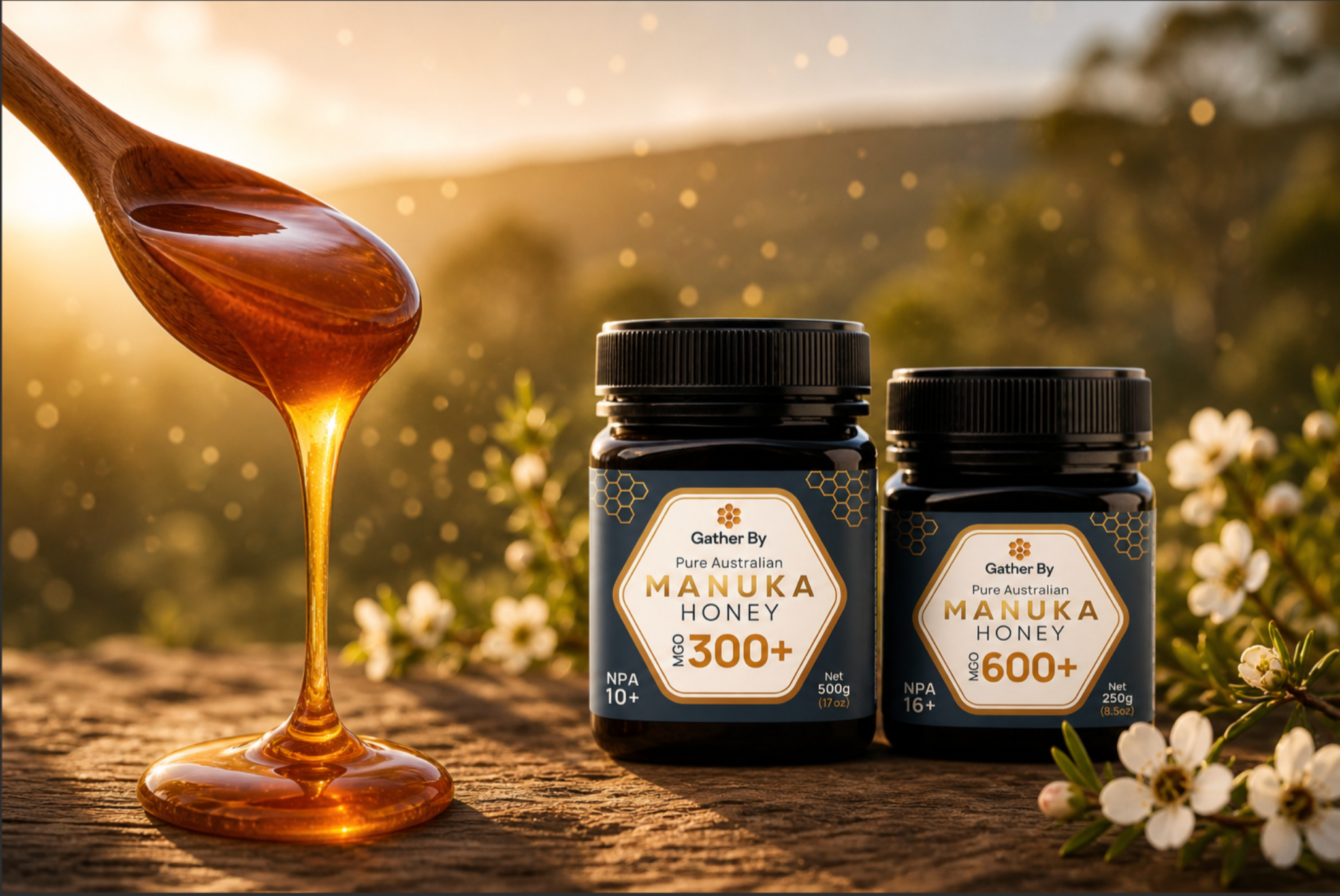
Can Manuka Honey Help With Seasonal Allergies? What the Science Says
A familiar autumn pattern
For many Australians, autumn doesn’t just bring cooler mornings - it brings the return of seasonal allergies.
Sneezing.
Itchy eyes.
Congestion.
Fatigue.
Seasonal allergies can be persistent and frustrating. While conventional treatments like antihistamines are widely used, many people are also looking for natural ways to support their system over time.
While best known for its antibacterial properties, there is growing interest in its broader role in supporting immune balance and inflammation.
So what does the science actually say?
How allergies work — and where Manuka honey fits
Allergies are not caused by the allergen itself, but by how the immune system responds to it.
When exposed to triggers such as pollen, dust or mould, the body can overreact — releasing histamines and inflammatory compounds that lead to symptoms like:
-
Sneezing
-
Runny nose
-
Itchy eyes
-
Throat irritation
Raw Manuka honey contains naturally occurring compounds including methylglyoxal (MGO), flavonoids and hydrogen peroxide.
These are being studied for their potential to:
-
Support immune balance
-
Help regulate inflammatory pathways
-
Soothe irritation in mucous membranes
While Manuka honey is not a replacement for medical treatment, it may offer supportive benefits when used consistently as part of a broader routine.
Why Manuka honey is different
Not all honey behaves the same way.
Unlike conventional or local honey, Manuka honey contains measurable levels of MGO — giving it a level of bioactivity not found in standard honey.
This is what sets it apart.
Research continues to explore how Manuka honey may support:
-
Inflammation response
-
Gut microbiome balance
-
Immune system regulation
Emerging research also points to a link between gut health and allergic sensitivity, making daily dietary choices increasingly relevant.
In simple terms, Manuka honey is not just a sweetener — it is a functional food with broader biological activity.
How to use Manuka honey during allergy season
One of the key differences between Manuka honey and conventional treatments is how it works over time.
Unlike antihistamines, which are designed to suppress symptoms, Manuka honey is typically used as part of a daily routine.
With consistent use, it may help support resilience rather than simply reacting to symptoms.
A practical approach:
-
1 teaspoon daily (approx. 8g)
-
Taken in the morning, ideally on an empty stomach
-
Or in warm (not boiling) water with lemon
For seasonal support, many people choose:
Consistency is key. Benefits are generally built over time, not from a single use.
Manuka honey for allergies — at a glance
|
Factor |
Recommendation |
|
MGO Level |
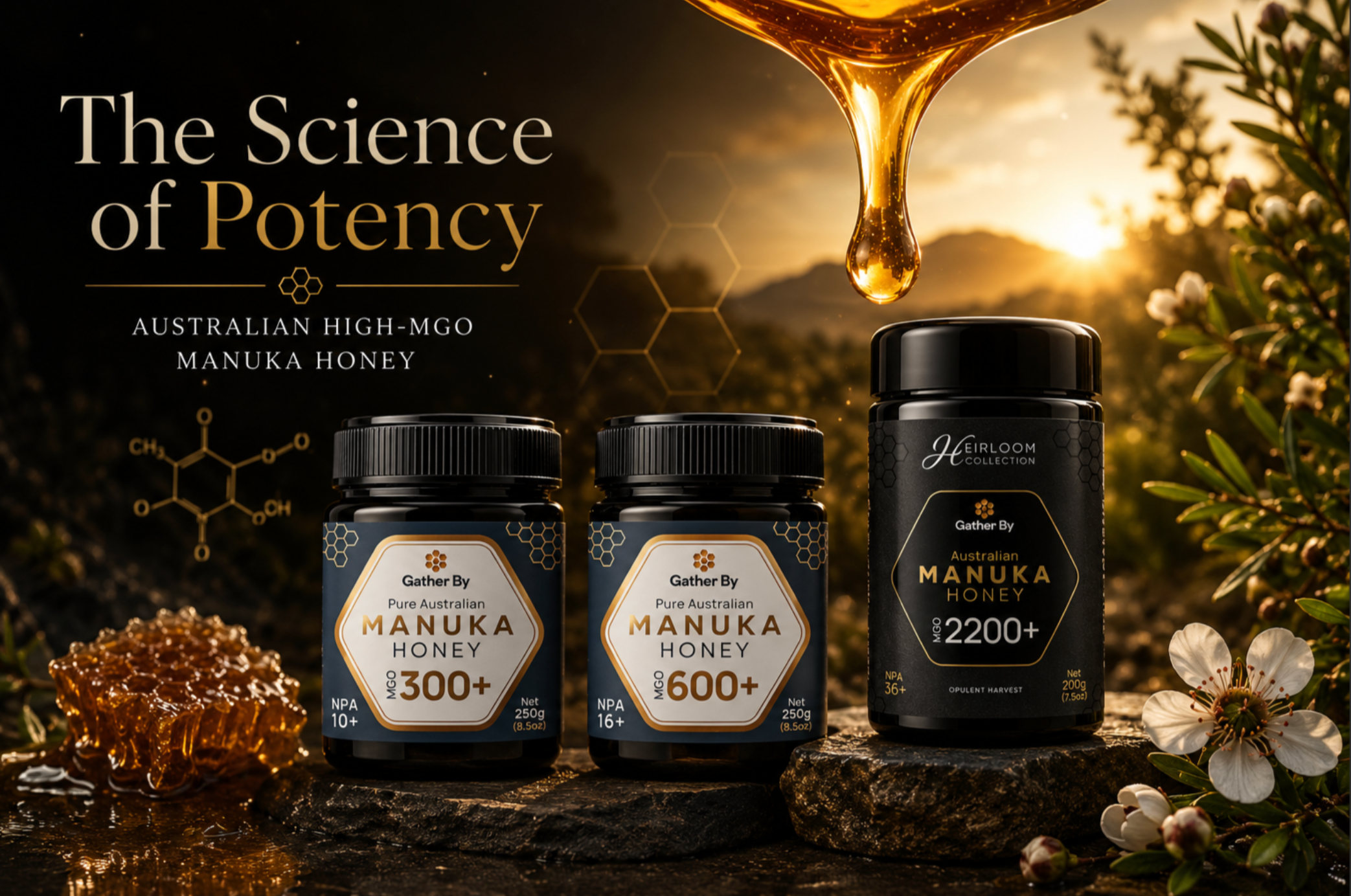
MGO300+ (daily), MGO600+ (stronger support) |
|
Daily Dose |
1 teaspoon |
|
Method |
Direct or in warm water |
|
Timing |
Morning or consistent daily routine |
|
Expected Timeline |
2–4 weeks of regular use |
A practical option: Manuka honey gummies
Consistency is often the hardest part of any wellness routine.
Manuka honey gummies offer a simple, measured way to maintain a daily habit without preparation.
They can be particularly useful for:
-
Busy mornings
-
Travel
-
Those who prefer a milder taste
-
Replacing conventional sweets during allergy season
They’re not a replacement for raw honey but they can support consistency, which is where the benefit lies.
Important: speak with your healthcare provider
Manuka honey is a natural food, but it should still be used thoughtfully.
Always consult your GP or allergist before using Manuka honey as part of an allergy management plan — particularly if you:
-
Have a known bee-product sensitivity
-
Are managing asthma
-
Are pregnant
-
Have underlying medical conditions
Manuka honey should be seen as a complement to — not a replacement for — professional care.
Build your allergy-season routine
If you’re looking to support your system this autumn:
👉 Build your daily routine with MGO300+ or MGO600+ Manuka honey
👉 Explore raw Australian Manuka honey
👉 Consider Manuka honey gummies for convenience
Choose from some of the best Manuka honey Australia produces — with certified MGO levels and full traceability.
Frequently asked questions
Can Manuka honey help with seasonal allergies?
Manuka honey may help support immune balance and inflammation, which are linked to allergy symptoms. It is not a cure but may be used as part of a broader approach.
How long does Manuka honey take to work?
Benefits are typically cumulative. Many people use it consistently for 2–4 weeks to observe changes.
MGO300+ is commonly used for daily support, while MGO600+ may be used for stronger seasonal support.
How much should I take?
Around 1 teaspoon per day is a common approach for ongoing use.
Can I take it every day?
Yes, many people incorporate small amounts daily as part of overall wellbeing.
A more natural way to support your system
Seasonal allergies are part of life for many Australians.
But how we respond to them can evolve.
Manuka honey represents a different approach — one focused not just on suppressing symptoms, but on supporting the body over time.
Simple. Consistent. Natural.
Written by Matt Blomfield
Founder, Gather By Australian Manuka Honey

Leave a comment
This site is protected by hCaptcha and the hCaptcha Privacy Policy and Terms of Service apply.